
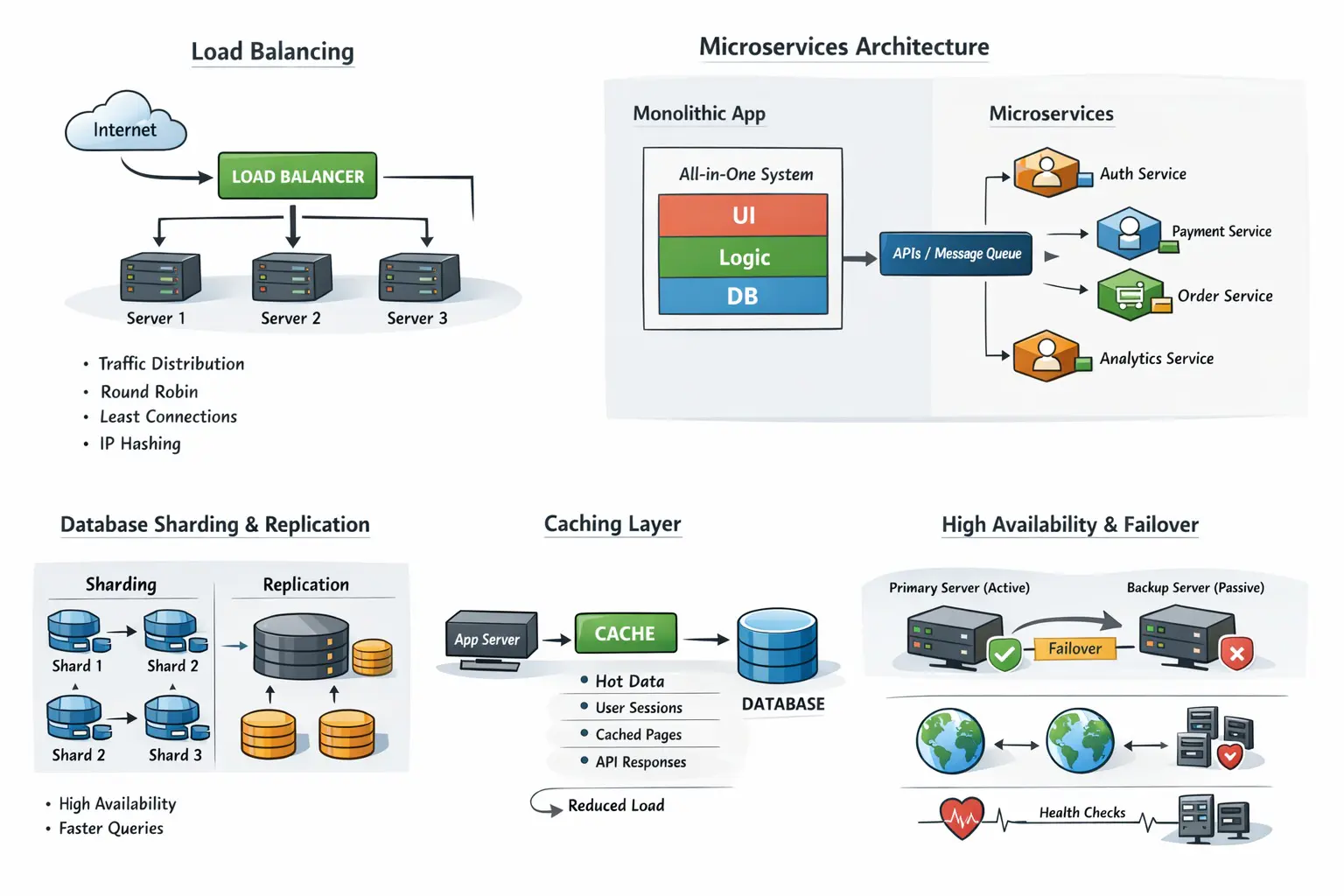
Modern System Design: How Scalable Applications Are Built
Modern apps like Netflix, Uber, or Amazon don’t run on a single server.
They rely on carefully designed distributed systems that are scalable, reliable, and fast.
In this blog, we’ll break down:
- Core system design components
- How traffic is handled at scale
- Real-world architecture patterns
🌐 Load Balancers – Traffic Control of the Internet
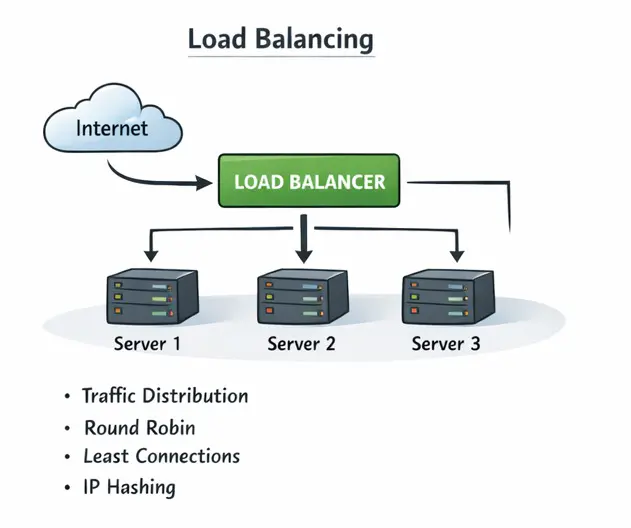
When millions of users hit your website at once, sending all requests to a single server would crash the system.
Load balancers distribute incoming traffic across multiple servers to keep applications fast and reliable.
What they do:
- Distribute traffic evenly
- Prevent overload
- Improve uptime
Common algorithms:
- Round Robin
- Least Connections
- IP Hashing
🧩 Microservices Architecture – Breaking Monoliths into Powerful Pieces
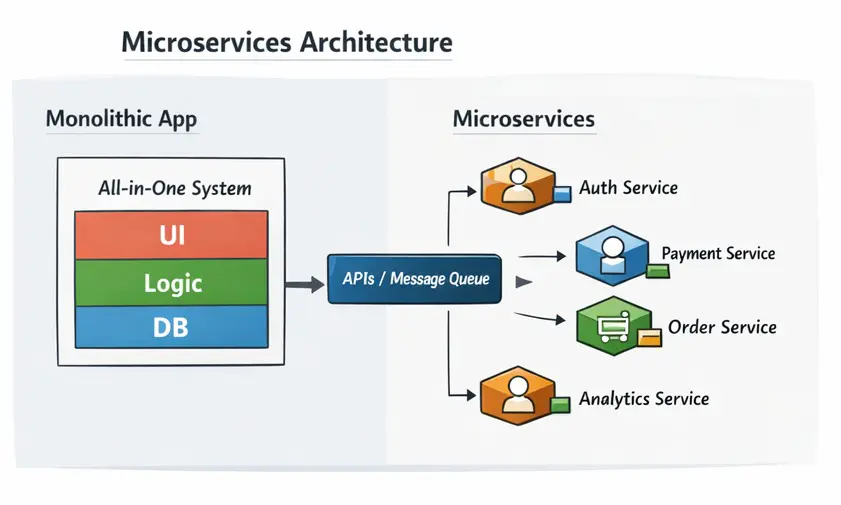
Instead of one giant backend, modern applications use independent services.
Examples include:
- Authentication Service
- Payment Service
- Order Service
- Analytics Service
Each service runs separately but communicates through APIs or messaging systems.
Benefits:
- Independent scaling
- Faster development
- Better fault isolation
Challenges:
- Network latency
- Service coordination
- Monitoring complexity
🗄 Databases at Scale – Sharding & Replication
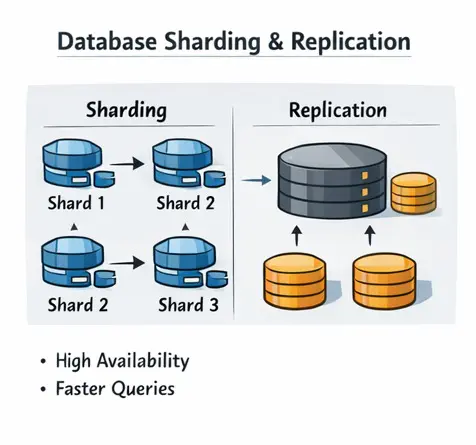
A single database cannot efficiently store billions of records.
Large systems use:
Sharding
Splitting data across multiple databases.
Replication
Creating read copies of the main database for performance and reliability.
Results:
- High availability
- Faster queries
- Massive scalability
⚡ Caching – The Speed Layer
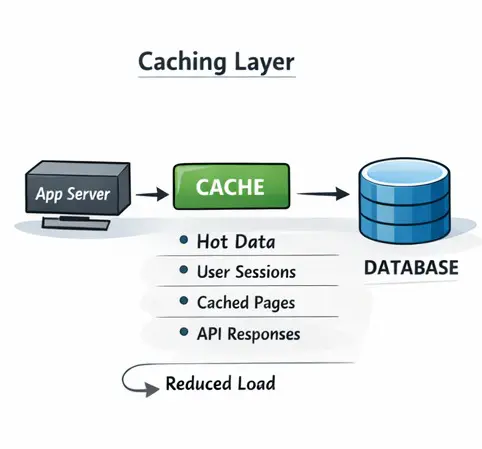
Instead of hitting the database for every request, applications cache frequently accessed data.
Commonly cached items include:
- User sessions
- Popular content
- API responses
Caching reduces response time from seconds to milliseconds.
🔐 High Availability & Failover
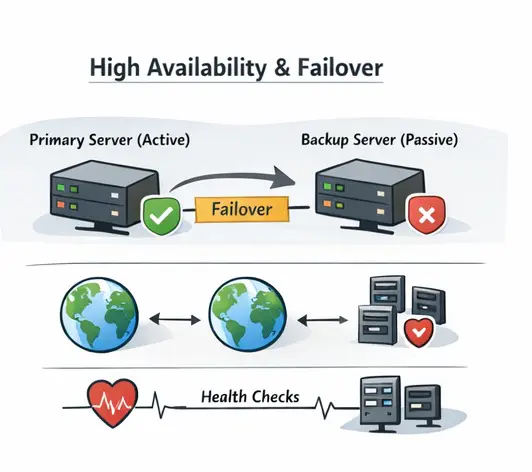
Failures are expected in large systems.
To handle them, platforms use:
- Redundant servers
- Multi-region deployments
- Health monitoring
- Auto-scaling
This ensures users experience little to no downtime.
📈 Final Thoughts
System design isn’t about memorizing diagrams.
It’s about understanding:
- Traffic flow
- Bottlenecks
- Scaling strategies
- Failure handling
Once you master these building blocks, you can design almost any scalable system.
🚀 Coming Next on Sarvadhi Digital
- Designing a Chat Application
- URL Shortener System Design
- Scalable E-commerce Platform
- Real-time Notification Systems
- Video Streaming Architecture
Stay tuned!